
Got Honest Feedback? How to Read Your AI Insight Report
Getting honest feedback is hard. But the harder part comes next. Even when candid feedback is finally in your hands, nothing changes if you can't read it well. One line of praise lifts you up, one sharp comment ruins your day, and the thing you actually need to fix often stays untouched. How you read feedback matters more than getting it.
How the feedback gets collected
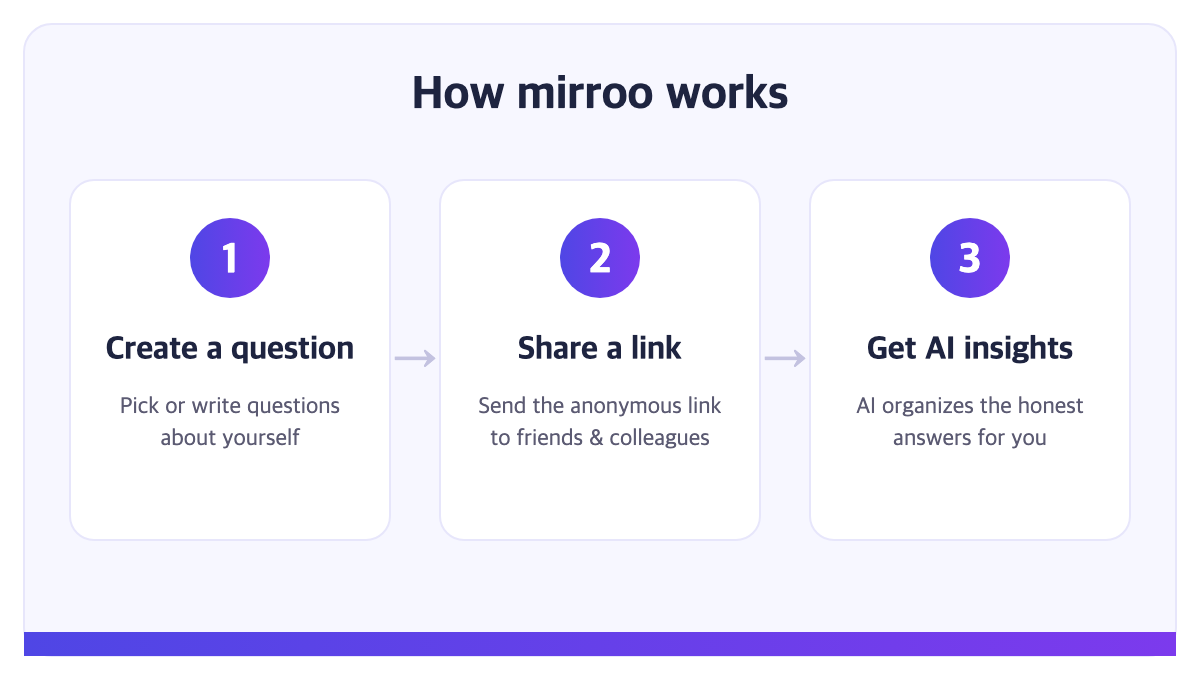
Before we talk about reading a report, it helps to know how that report comes together. The key is anonymity. When people aren't named, they're far more honest, and an AI gathers those candid answers and organizes them. Instead of showing you every individual reply, it pulls out the common threads and groups them into insights.
What the report looks like
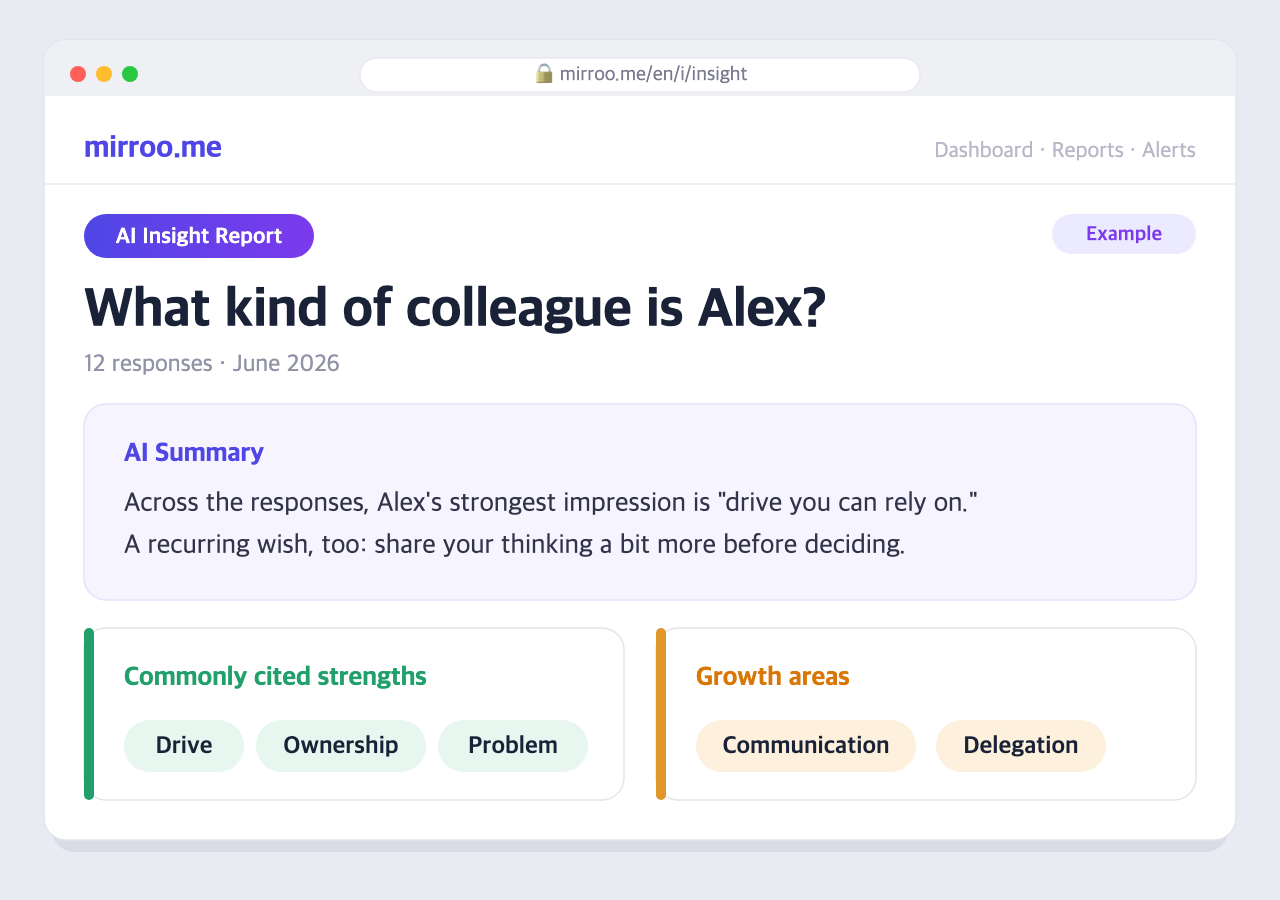
The result of all that is your insight report. Below is an example screen. Strengths and weaknesses, the keywords people mentioned again and again, and the overall impression are laid out so you can take it in at a glance. Instead of a messy pile of replies, you get a single picture of how people generally see you.
So how should you actually read it? Just keep four things in mind.
1. Tell one voice apart from a pattern
The first thing to do is separate the one-off from the pattern. A single comment might just reflect how that one person felt that day. But when several people independently say the same thing, that's not a coincidence, it's a pattern. Pay attention first to the keywords that keep showing up. Don't get thrown by a remark that appears only once; give priority to the signals that overlap.
2. Grow your strengths on purpose
People instinctively zero in on their weaknesses. But the real lever for growth often sits on the strengths side. The things you already do well, the qualities people keep recognizing, can make a big difference with just a little more intention behind them. Don't just smile at the strengths section and scroll past. Take a moment to ask, "How can I use this more often, and at a bigger scale?"
3. Pick one or two weak spots and act
Even if you spot several weaknesses, trying to fix them all at once usually means nothing changes. Choose just one or two, the ones mentioned most often or the ones with the biggest impact on you right now. Then turn each into a concrete action, not a vague resolution. Not "be softer when I talk," but something you can try tomorrow, like "before pushing back in a meeting, summarize the other person's point in one sentence first."
4. Drop the emotion, and check back regularly
Tough feedback triggers a defensive reflex the moment you read it. That's natural. Just don't let that first reaction write your conclusion. Sleep on it, then revisit it as data, and the signals that emotion was hiding tend to read surprisingly calmly. And don't treat it as a one-time read. Gather feedback again after some time has passed. Only then can you see whether the changes you made actually landed as changes in other people's eyes.
Feedback is a mirror. Looking once is good, but checking back now and then to see how you've changed is far more valuable. Create a question about yourself at mirroo.me and share the anonymous link. Scattered, honest comments come back to you as a single, readable insight.
Curious how you come across on this? Ask anonymously
Sign up